
Forex trading bots promise efficiency and discipline, yet one question keeps coming up among users: can these systems truly adjust when market behavior shifts? The honest answer is that most standard bots do not adapt automatically. Their performance depends entirely on how they were built and whether the person using them actively maintains them.

The Hard Truth About Static Trading Logic
Most trading bot and ea trading bot systems operate on fixed rules created during development. Once programmed, they continue applying the same indicators, entry conditions, and risk parameters regardless of whether the market is trending strongly, ranging sideways, or experiencing sudden volatility spikes. A strategy that excels in calm conditions can quickly fall apart when economic surprises hit or when major central banks change direction.
This lack of built-in flexibility explains why many automated trading robot setups deliver strong results for a few weeks or months and then begin to struggle. The market never stays the same, but the majority of forex trading bot logic stays frozen in time.
How Different Bot Strategies Handle Changing Markets
Multi level strategies try to cope with adverse moves by adding positions at set intervals. While this approach can recover from temporary pullbacks, it often leads to growing exposure precisely when the market refuses to reverse. Without smart limits, these systems can face extended periods of stress during prolonged trends.
Scalp strategies, on the other hand, aim for quick profits in short timeframes. They perform reasonably well in low-volatility sessions but can generate strings of small losses when volatility suddenly increases or when liquidity dries up. Many ai forex trading bot versions struggle here because their tight stop losses get hit repeatedly in choppy conditions.
Even bots using advanced indicators like RSI divergence or multi-timeframe confirmation remain vulnerable if the underlying market regime changes without warning.
best forex trading sessions for automated trading
The Role of Artificial Intelligence in Adaptation
Some newer ai trading bot and ai robot trading solutions claim better adaptability through machine learning or sentiment analysis. These systems can analyze real-time data from news, social media, or broader market mood to adjust trade direction. However, even these advanced tools have limits. They still rely on historical patterns and can misread entirely new situations, such as unexpected geopolitical events or sudden policy shifts.
True dynamic adaptation remains rare in retail-level automated trading robot tools. Most ai features act more as filters than as systems that rewrite their own rules on the fly.
Why Manual Adjustments Still Matter
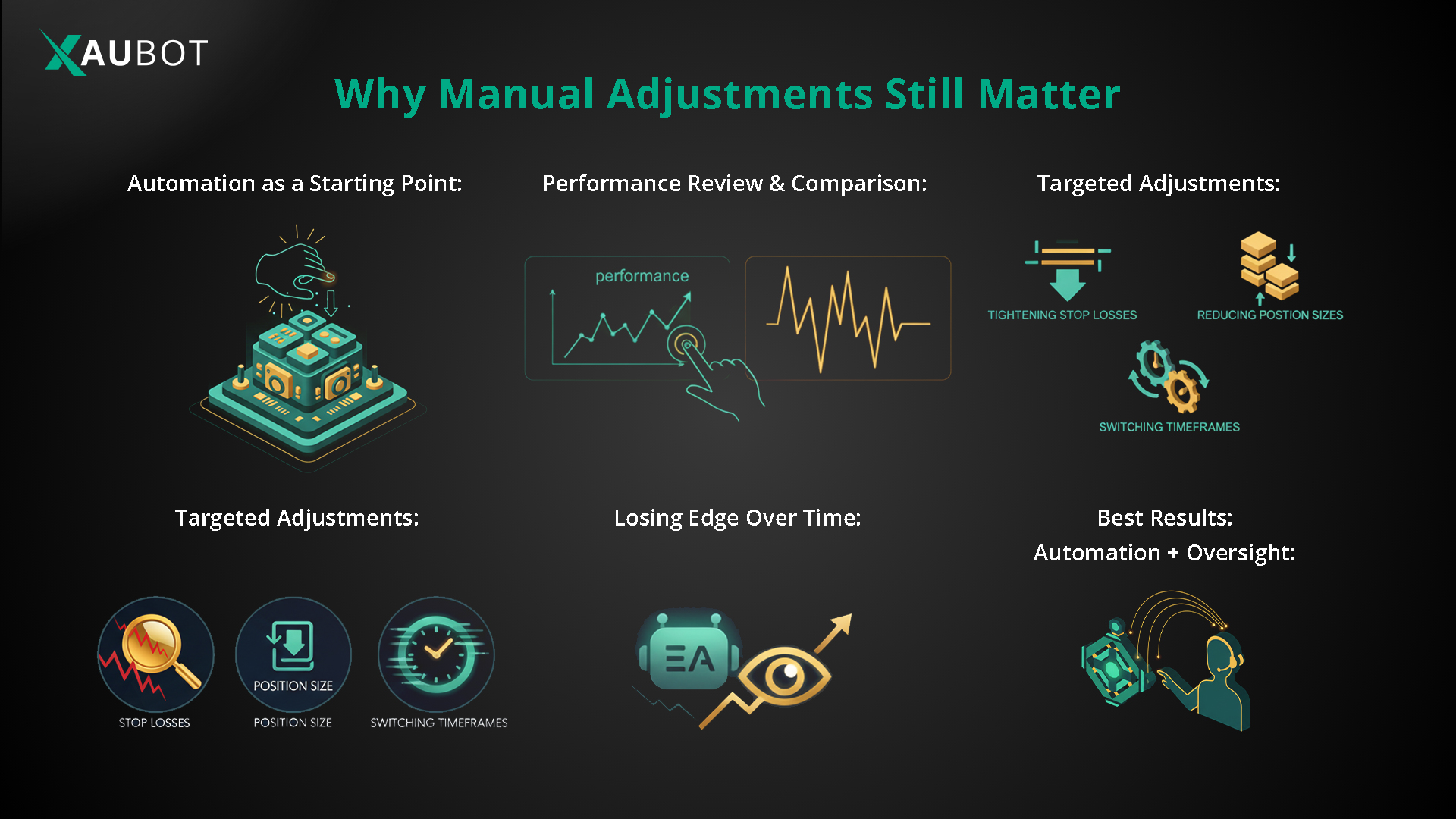
Experienced traders treat their forex auto trading bot or ea forex robot as a starting point rather than a finished product. They regularly review performance, compare live results against current market behavior, and make targeted changes to parameters. This might involve tightening stop losses during high-volatility periods, reducing position sizes after a drawdown, or switching timeframes when certain pairs become too noisy.
Without this ongoing human input, even well-designed ea trading bot systems tend to lose their edge over time. The best results usually come from combining automation with periodic oversight.
Practical Steps to Improve Bot Adaptability
Traders can take several concrete actions to help their systems handle changing conditions better. Start by testing strategies across different market phases using historical data from both trending and ranging periods. Include realistic slippage and spread costs in all tests. Set clear rules for when to pause the bot, such as during major news releases or when drawdown reaches a predefined level.
Using multiple uncorrelated strategies or rotating between different currency pairs can also reduce reliance on any single market condition. Volatility filters and session-based trading hours add another layer of protection by keeping the bot out of unfavorable environments.
why most forex trading bots fail
How XauBot Supports Smarter Adaptation
XauBot gives users practical tools to build forex trading bots with adaptability in mind. The platform lets traders choose between multi level strategy and scalp strategy, then select entry logic ranging from the popular XAUBOT reversal setup to more advanced options like momentum pullback with EMA filter or liquidity sweep with break of structure.
During configuration, users define drawdown limits, risk levels, and trading hours while deciding whether to activate the news filter or ai decision support. This structured process encourages thoughtful choices that consider different market scenarios from the beginning. The resulting ea trading bot or forex ea bot can then be exported for MT4 or MT5, ready for live use with built-in protective features.
By guiding users through these decisions, XauBot helps create systems that are less likely to collapse when market conditions evolve.
Moving Forward with Realistic Expectations
Forex trading bots can deliver consistent execution and remove emotional decisions, but they rarely adapt on their own to every market shift. Success depends more on how traders design, monitor, and update their automated trading robot systems than on any magic adaptability feature.
The traders who achieve the best long-term outcomes treat automation as a powerful assistant rather than a completely independent solution. They combine solid initial logic with ongoing attention and a willingness to make adjustments when the market sends clear signals that something has changed.
Understanding these realities allows anyone exploring trading bot, ai trading bot, or ea forex robot options to approach automation with clearer eyes and better preparation for the dynamic nature of currency markets.