

Key Takeaways
- Backtests can create a false sense of confidence. Overfitted strategies may perform exceptionally well on historical data but fail when exposed to fresh, unseen market conditions.
- Markets change, and rigid bots can struggle to adapt. Strategies built for specific volatility or market regimes may break down when trends, volatility, or economic conditions shift.
- Weak risk management can turn normal losing periods into catastrophic losses. Aggressive position sizing, unlimited drawdown exposure, and poorly controlled multi-level or scalping strategies can quickly damage an account.
- Successful automation still requires realistic testing and ongoing oversight. Slippage, spreads, execution delays, technical issues, and changing market conditions mean traders should forward-test systems, monitor performance, and be prepared to pause or adjust them when necessary.
Automated forex trading bots promise hands free profits and consistent results, yet the reality often tells a different story. Many traders who deploy a trading bot, ai trading bot, or ea trading bot eventually watch their accounts decline after initial success. Understanding the main reasons behind these failures helps users approach automation with realistic expectations and better preparation.

The Backtest Trap That Misleads Most Users
One of the biggest culprits is the illusion created by perfect backtests. Many forex trading bot systems look outstanding when tested on historical data, showing high win rates, smooth equity curves, and impressive returns. However, these results frequently come from overfitting, where the strategy gets tuned too closely to past price movements that may never repeat exactly.
Studies of algorithmic strategies show that backtested performance often fails to predict live results, with a very low correlation between simulated Sharpe ratios and actual outcomes. Around 44 percent of published strategies do not hold up when applied to fresh, unseen data. This explains why so many automated trading robot setups collapse shortly after going live.
Lack of Adaptability to Changing Market Conditions
Markets evolve constantly due to shifting economic policies, geopolitical events, and changing volatility regimes. Most rigid ea forex trading robot systems rely on fixed rules that worked well during specific periods but break down when conditions change. A strategy optimized for low volatility ranging markets can suffer heavy losses during strong trends or sudden news driven spikes.
Even advanced ai trading bot options sometimes struggle with completely unfamiliar events because they depend heavily on historical patterns. Without built in mechanisms to pause trading or adjust parameters dynamically, these bots continue executing trades in unfavorable environments, turning small drawdowns into account threatening losses.
Poor or Missing Risk Management Rules
Many trading bots fail because they lack robust risk controls. Aggressive position sizing, unlimited drawdown exposure, or the absence of daily loss limits can wipe out capital quickly during a losing streak. Research indicates that over half of automated trading accounts experience significant failure within the first three months, often due to unchecked risk during adverse moves.
In multi level strategies that add positions during drawdowns, insufficient safeguards can lead to dangerously large basket sizes. In scalp strategies, even a modest string of losing trades can accumulate fast if stop losses prove too wide or take profits too ambitious relative to real market slippage and spreads.
Execution Realities That Backtests Ignore
Live trading introduces frictions that backtests rarely simulate accurately. Slippage, variable spreads, requotes, and broker execution delays all erode performance. A bot that assumes instant fills at exact prices often sees its edge disappear in real conditions, especially during high impact news or low liquidity periods.
Technical issues such as connection drops, platform glitches, or improper settings further contribute to unexpected behavior. These practical gaps explain why many forex auto trading bot users see live results fall far short of simulated ones.
Understanding drawdowns in automated forex trading
Over Reliance Without Ongoing Monitoring
Traders sometimes treat their ea trading bot as a set and forget solution. They deploy it and stop reviewing performance until losses mount. Successful automation still requires periodic optimization, forward testing on current data, and human oversight to intervene during unusual market regimes.
Emotional factors play a role too. When drawdowns appear, many users manually interfere with the bot or abandon it altogether, preventing the strategy from completing its intended cycles.
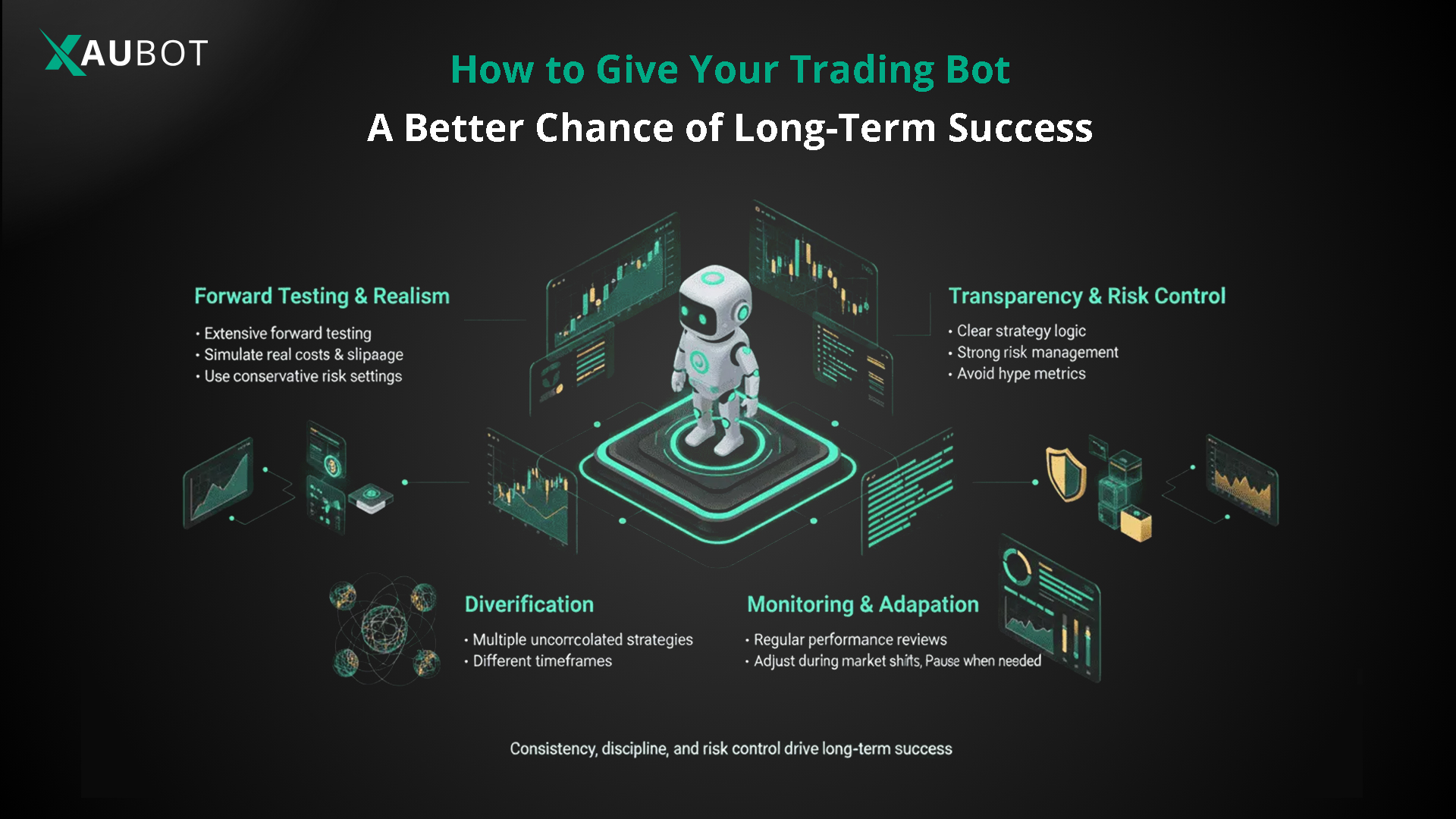
How to Give Your Trading Bot a Better Chance of Long Term Success
While challenges exist, certain practices improve the odds. Thorough forward testing on demo accounts, realistic simulation of costs and slippage, and conservative risk parameters all make a difference. Diversifying across multiple uncorrelated strategies or timeframes can reduce reliance on any single market condition.
Regular performance reviews and willingness to pause or adjust the system during major regime shifts help maintain longevity. Choosing bots with transparent logic and strong risk management features provides a more solid foundation than chasing hype around high win rate claims.
Building More Resilient Automated Solutions with XauBot
Platforms like XauBot address several common failure points by guiding users through a structured creation process. Traders select the forex market and choose between a multi level strategy or scalp strategy, then pick entry logic such as the popular XAUBOT reversal approach or other indicator based setups. Configuration includes clear drawdown limits, risk level selection, capital allocation guidance, news filters, and optional ai decision support for sentiment alignment.
This step by step method encourages better risk awareness from the start and produces ea trading bot or forex trading bot exports ready for MT4 or MT5. Users with smaller accounts receive hints toward cent accounts and conservative settings, while larger capital allows more flexibility with proper controls in place.
By focusing on realistic parameters and protective features, traders can create automated trading robot systems designed for survival rather than short term optimization.
How to build a more resilient forex trading bot
Final Thoughts on Automation in Forex Trading
Most automated forex trading bots fail over time due to overfitting, lack of adaptability, weak risk management, and the gap between simulated and real market conditions. These issues affect trading bot, ai trading bot, ea forex robot, and forex ea bot users alike, regardless of the underlying technology.
Success comes from treating automation as a disciplined tool rather than a guaranteed profit machine. Combine solid strategy design, strict risk rules, ongoing monitoring, and continuous learning. With the right approach, a well built trading bot can support consistent execution and help overcome common emotional pitfalls that plague manual traders.